The O'Connell Street Rising Walk
Dublin, Ireland
This walk through O’Connell Street and nearby landmarks traces how Dublin became a city of literature, commerce, nationalism, and revolution. It follows the 1916 Easter Rising at the GPO and Moore Street, James Joyce’s literary Dublin, and the cultural revival around the Abbey Theatre, Yeats, and Lady Gregory. It also highlights the Edwardian commercial city and the legacy of Daniel O’Connell, whose campaigns reshaped Irish politics.
The stops
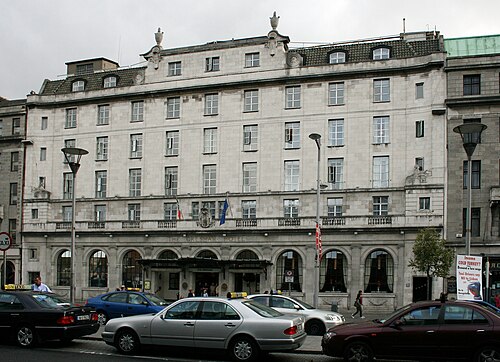
- 01 The Gresham Hotel
A classic Edwardian-era hotel on the city’s showcase boulevard, reflecting the commercial confidence and hospitality culture of early 20th-century Dublin.
- 02 James Joyce Centre
A focal point for Joyce’s city: a place to connect the novelist’s maps, language, and characters to the streets just outside the door.
- 03 Countess Markievicz and the Department of Labour
This stop ties the revolutionary role of Countess Markievicz to the later political institutions that grew from the struggle for independence.
- 04 Hugh Lane Gallery
Founded by Sir Hugh Lane, a champion of the cultural revival contemporaneous with Yeats and the Abbey Theatre.
- 05 Moore Street
A street of market trade and insurgent history, Moore Street is where the Rising's final chapter and the everyday city of hawkers, shoppers, and Edwardian commerce collide.
- 06 General Post Office
The symbolic heart of the 1916 Rising: Pearse read the Proclamation here and the building became the insurgents' headquarters, making it one of Dublin's defining revolutionary sites.
- 07 Daniel O'Connell Monument
The monument anchors the street’s democratic symbolism and reminds visitors that the city’s public space was long shaped by constitutional nationalism before the Rising.
- 08 Liberty Hall
Historical headquarters of the Irish Transport and General Workers' Union and base for James Connolly prior to 1916.
- 09 The Abbey Theatre
The national theatre at the centre of Irish literary revival, where Joyce's cultural moment, nationalist drama, and post-1916 identity all converged in performance.
- 10 Abbey Street
A street where theatre, tram traffic, printing, trade, and nationalist culture intersected in the Edwardian city Joyce described and the revolutionary city inherited.
- 11 Clerys
One of Dublin’s best-known department stores, emblematic of Edwardian retail culture and the evolving consumer life of the city centre.
- 12 O'Connell Street
The grand boulevard of O'Connell legacy, civic parade, and the city skyline that was transformed by revolutionary fire in 1916. It also frames the commercial and political heart of Joyce's Dublin.
The narration at every stop is in the app — this is the map of where it takes you, with a line on each stop.
More walks in Dublin
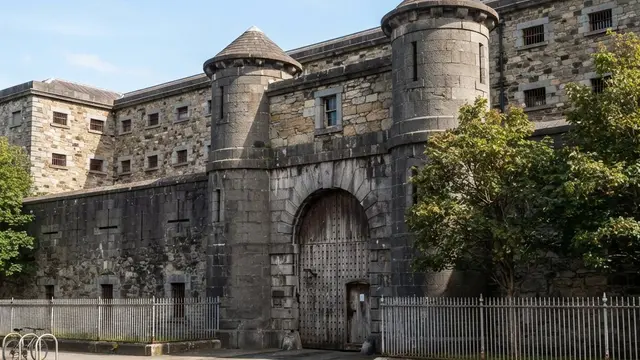
The Kilmainham Gaol & Arbour Hill Walk
Dublin, Ireland
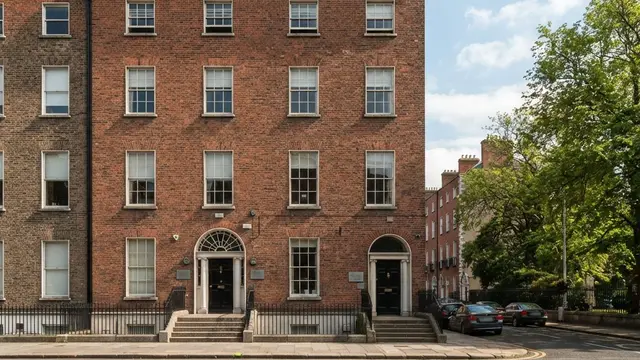
The Georgian Dublin Walk: Merrion Square to Parliament House
Dublin, Ireland
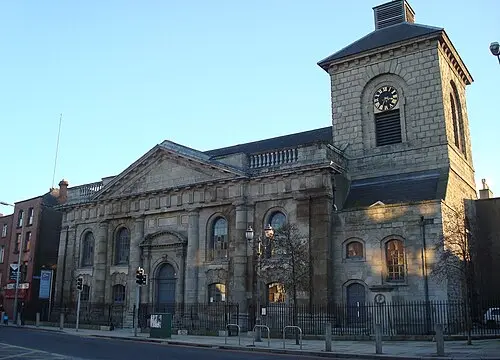
The Liberties: Guinness, Churches & Rebellion
Dublin, Ireland
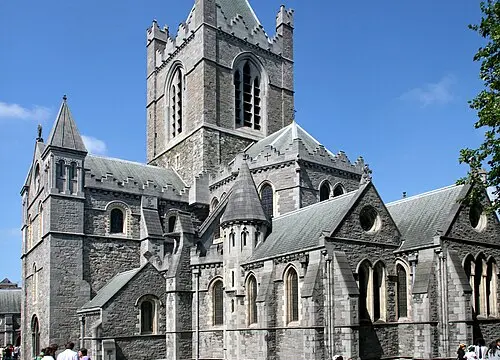
The Liberties: Vikings, Whiskey & the Four Courts
Dublin, Ireland
Walk The O'Connell Street Rising Walk with a voice in your ear.
Download Odyssey Guide on iPhone to start this walk.
Download on the App StoreiPhone · iOS 16 and later