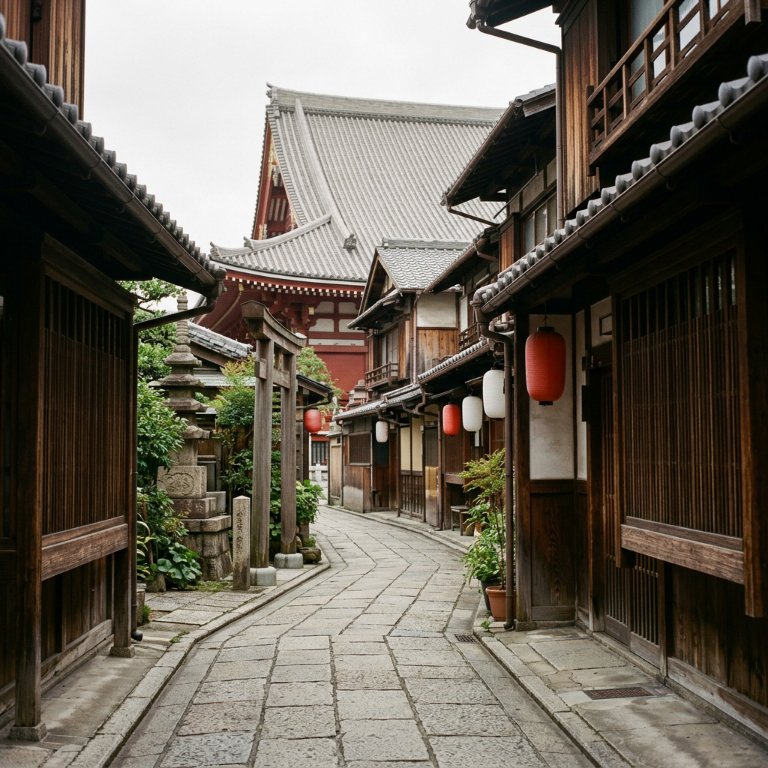
The Shogun's City: Samurai, Shrines & the Floating World
Tokyo, Japan
This walk through eastern Tokyo traces the world of old Edo under the Tokugawa shogunate, when the city was tightly organized and ruled by samurai administrators. Starting at Ryogoku Kokugikan and continuing through Ekō-in, the memorial of the Forty-seven rōnin, Kaminarimon, Senso-ji, and Asakusa Shrine, it links warrior memory, sacred spaces, and popular spectacle. Along the way, the route shows how temples, sumo, and neighborhood life all fit into one shared Tokugawa city.
The stops
- 01 両国国技館 (Ryogoku Kokugikan)
Ryogoku Kokugikan is the main sumo arena in Ryogoku, Tokyo, and the present building opened in 1985 as the modern home of professional sumo.
- 02 両国花火資料館 (Ryogoku Fireworks Museum)
The Ryogoku Fireworks Museum is a small museum in the Ryogoku area dedicated to the history of fireworks and the Sumida River display rooted in Edo festival culture.
- 03 Ekō-in (Ekō-in)
Ekō-in is a Buddhist temple in Ryogoku founded in 1657 to pray for victims of the Great Meireki Fire, especially the many unclaimed dead.
- 04 Forty-seven rōnin (Forty-seven rōnin)
This stop marks a memorial in Ryogoku associated with the Forty-seven rōnin, the retainers who avenged Asano Naganori in 1703 after his forced suicide.
- 05 お江戸両国亭 (Oedo Ryogoku-tei)
Oedo Ryogoku-tei is an entertainment venue in Ryogoku associated today with traditional comic performance in a district long tied to Edo popular culture.
- 06 Edo-Tokyo Museum (Edo-Tokyo Museum)
The Edo-Tokyo Museum is a history museum in Ryogoku that opened in 1993 and presents the urban development of Edo and Tokyo through large-scale reconstructions and artifacts.
- 07 両国湯屋江戸遊 (Ryogoku Yuyado Edo-Yu)
Ryogoku Yuyado Edo-Yu is a modern bathhouse in Ryogoku whose name evokes Edo, though the present business is contemporary rather than a preserved Tokugawa site.
- 08 東京都復興記念館 (Tokyo Metropolitan Memorial Hall for the Great Kanto Earthquake Restoration)
The Tokyo Metropolitan Memorial Hall for the Great Kanto Earthquake Restoration is a memorial museum in Yokoamicho Park dedicated to the victims of the 1923 Great Kantō Earthquake and later wartime losses.
- 09 Kataonami stable
Kataonami stable is a sumo training stable in the Ryogoku area, where professional wrestlers live and practice within the hierarchical stable system.
- 10 Kaminarimon (Kaminarimon)
Kaminarimon is the outer gate of Sensō-ji in Asakusa, famous for its giant red lantern and repeated reconstructions after fire and war.
- 11 Senso-ji (Senso-ji)
Sensō-ji is Tokyo's oldest temple, founded in legend in the seventh century at Asakusa and long sustained as a major Buddhist center and pilgrimage site in Edo.
- 12 Asakusa Culture and Tourism Center (Asakusa Culture and Tourism Center)
The Asakusa Culture and Tourism Center is a modern visitor facility opposite Kaminarimon, designed by architect Kuma Kengo and opened in 2012.
- 13 Asakusa Shrine (Asakusa Shrine)
Asakusa Shrine is a Shinto shrine beside Sensō-ji in Asakusa, rebuilt in 1649 under Tokugawa patronage and dedicated to the three men linked to the temple's founding legend.
The narration at every stop is in the app — this is the map of where it takes you, with a line on each stop.
More walks in Tokyo
The Shibuya of Crossings & Crowds
Tokyo, Japan
Minato: A Tokyo Time Capsule
Tokyo, Japan
The Asakusa of Gods, Gates & Golden Flames
Tokyo, Japan
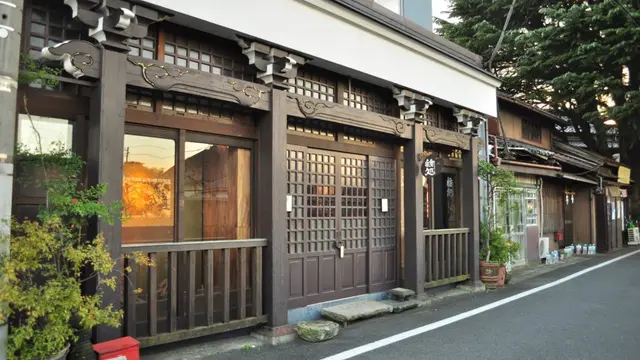
Yanaka: Old Tokyo's Historic Quiet Streets
Tokyo, Japan
Walk The Shogun's City: Samurai, Shrines & the Floating World with a voice in your ear.
Download Odyssey Guide on iPhone to start this walk.
Download on the App StoreiPhone · iOS 16 and later